Merry Christmas & Happy New Year!
Christmas Deliveries: If you placed an order on or before midday on Friday 19th December for Christmas delivery it was despatched before the Royal Mail or Parcel Force deadline and therefore should be received in time for Christmas. Orders placed after midday on Friday 19th December will be delivered in the New Year.
Please Note: Our offices and factory are now closed until Monday 5th January when we will be pleased to deal with any queries that have arisen during the holiday period.
During the holiday our Gift Cards may still be ordered for any last minute orders and will be sent automatically by email direct to your recipient - see here: Gift Cards
Places
4 places found.
Those places high-lighted have photos. All locations may have maps, books and memories.
Photos
68 photos found. Showing results 321 to 68.
Maps
70 maps found.
Books
Sorry, no books were found that related to your search.
Memories
713 memories found. Showing results 161 to 170.
The 1950s
Although I didn't live at Hamsterley Colliery, I spent all my school holidays with my grandmother, Mary Willis who lived in the top bungalow at Derwent Haven. She lived to be nearly a 100 which I suppose justified ...Read more
A memory of Hamsterley by
Tinker Tailor Solder Sailor 1916
Lynette Carter nee Evans My grandfather was Romany Gypsy, Stephen Evans, who better known as (Stinny)? During 1916 he lived in Gorseion, while his wife; my grandmother Mary Ellen Boswell lived in Gowerton. Nobody ...Read more
A memory of Gorseinon in 1900 by
School Memories
I was at Wath Grammar School from 1952 until 1959. I have lots of lovely memories of my time there. In particular my teachers and school friends. I loved Barbara Swan - Geography teacher, Hetty Clewes (nee Upton) - history, ...Read more
A memory of Wath Upon Dearne in 1954 by
Matthew Kimbers Cross
As a child I remember a cross made of iron painted green at the roadside between the two turnings into East Hendred. It bore the name "Matthew Kimber". Daffodils would appear there in the spring. Can anyone tell me what it was about?
A memory of East Hendred in 1950 by
Mottingham
I used regularly to walk up Mottingham Lane to visit my great aunt and her family who lived on the Horn Park Estate in and around Alnwick Road. Apparently, I threw a toy from my pram near the farm which my parents were never able to ...Read more
A memory of Mottingham by
Early Years
SIRENS WAILING, Get up, wrap a blanket around yourself, stand on the bed and wait for Dad (Alfred Roger) or Eddith Mary (Mum) to come and go down 13 stairs and out to the shelter that was in the garden. Joyce my older sister would have ...Read more
A memory of Southall in 1944 by
My Grandads Forge
My Granddad William Anderson bought the forge when he moved to Leiston from Surrey after the war with my Nan and three children, my mother Yvonne, aunty Ivy and uncle Billy, where he shod horses in and around Leiston, then he turned ...Read more
A memory of Leiston in 1950 by
Countryside Memories Holidays In The 1950s
The journey from our home in North Essex to my grandparents’ home in North Derbyshire took almost a full day back in the 1950s, allowing of course for periodic stops along the way. The first, usually at ...Read more
A memory of Glossop in 1955 by
The Old Step Bridge Woking
This memory is very clear to me. As a resident of Horsell I would often walk down Brewery Road to Goldsworth School and over the step bridge, with its iron railings painted green in those days. My brother would take me along ...Read more
A memory of Woking in 1957 by
Mr Atlee Garfield Road
Mr Atlee, or as he was when I knew him, Old Mr Atlee, lived on the corner of Cowper and Garfield Roads. Garfield Road was a long road starting at the balloon factory, passing the primary school and the Rec and ending at the ...Read more
A memory of Wimbledon in 1953 by
Captions
788 captions found. Showing results 385 to 408.

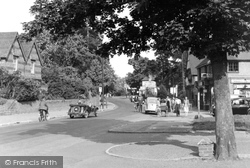
Although it retains some villagey characteristics, and was once important in the Wealden iron industry, it is very much nowadays a small town.
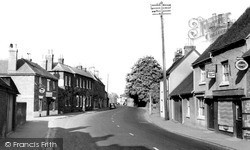
Items of historical interest, including tools and pottery, were found locally, suggesting there has been a settlement here since the early Iron Age.
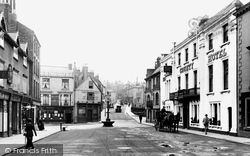
The cast-iron balconies were a feature of town houses belonging to wealthy families.
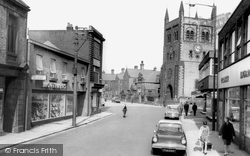
An iron works was opened in 1837, but it was the discovery two years later of ironstone deposits at nearby Shotley Bridge, and the opening of coal pits during the 1840s, that sparked off the town's growth
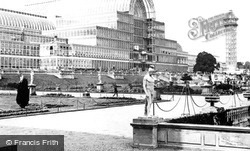
This monumental glass pleasure dome was created in Hyde Park by Joseph Paxton for the Great Exhibition of 1851. 2,000 workers erected it at high speed, bolting and welding together 3,300 iron columns
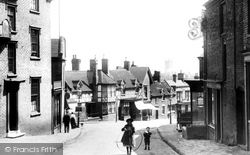
Local businessmen were also keen investors in the iron bridge, which opened markets to the north.
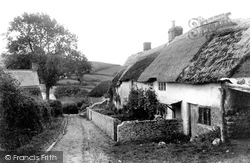
A rustic corner, with mossy thatch and a corrugated-iron porch lid, lies beside Loves Lane on the western slope of Hardown Hill.
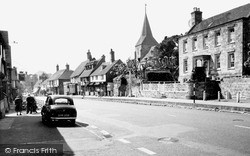
Middle House and Walnut Tree Cottage, just visible on the left of the parked car, are two timber-framed buildings which have survived from the period when Mayfield gained its prosperity from iron working
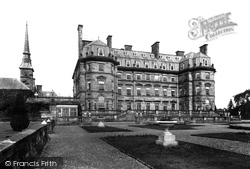
The Culpepers built Bedgebury Park in a classical style from the profits of the Wealden iron industry. In 1836 the Napoleonic war hero Viscount Beresford retired here.
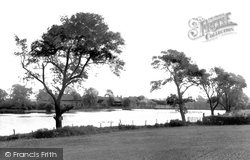
To the east is Markland Grips, an Iron Age hillfort on an outcrop above a craggy limestone valley.
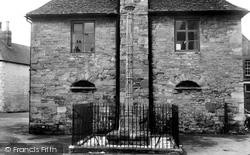
Sad to say, the original 14th-century Saxon cross in the Market Square, seen here with its iron support, succumbed to old age.
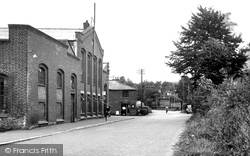
This was the iron works that made such things as the bridge over Micheldever Road.
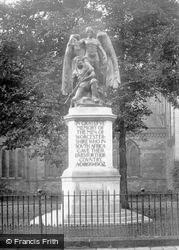
The iron railings shown in the photograph are no longer there, having been salvaged for scrap in World War Two.
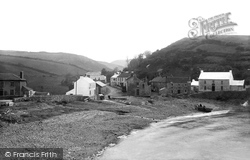
Strawberry Hill, above the village, was the site of an Iron Age fort. A boat is being beached to the right beyond the slipway and the other boats in the centre.
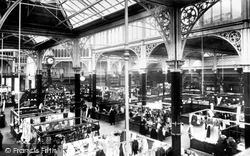
The magnificent cast iron pillars held up the glass roof, giving welcome natural light to the interior of the busy Borough Market.
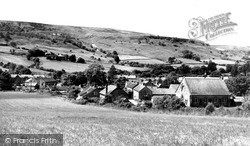
It was a boom town during the 19th-century iron-mining era, and takes its name from the remains of a 12th-century Cistercian nunnery, now built into the parish church.
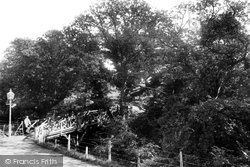
The turn of the century would see the rustic bridges replaced by iron ones, asphalt laid in sections, and steps cut into the steepest slopes.
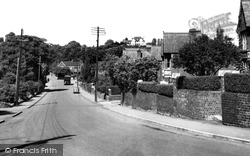
Our vantage point for this view is near to St Peter's Church, whose construction in the late 1920s made use of stone recycled from the defunct Cyfarthfa iron works.
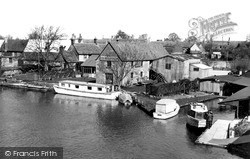
The small boatyard on the right is surrounded with corrugated iron-clad buildings, whilst the stone building in the centre proclaims tea gardens on a gable sign, ready for business on this early spring
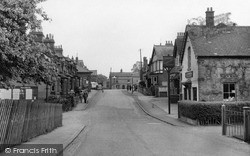
The pretty white brick station building with its cast iron latticed windows is situated out of shot to the left and seems, at the end of the 20th century, to be empty and disused.
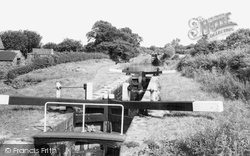
The Macclesfield Canal passes through the outskirts of Congleton, complete with an elegant iron aqueduct where it crosses Canal Street, and several attractive bridges.
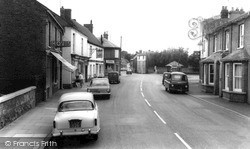
The ancient Butter Cross became unsafe and was replaced in 2000 by a wrought iron replica with seating.
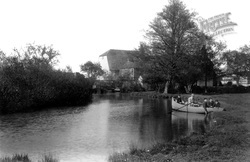
By the 20th century, Goudhurst has quietened down considerably compared to earlier times, when the iron smelting and cloth making industries were at their peak.
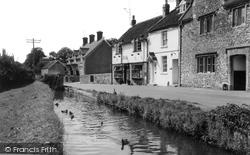
Note the cast- iron boot scraper to the left of the doorway on the right. Dinder House was built in Georgian style by the Rev William Somerville in about 1800.
Places (4)
Photos (68)
Memories (713)
Books (0)
Maps (70)