Merry Christmas & Happy New Year!
Christmas Deliveries: If you placed an order on or before midday on Friday 19th December for Christmas delivery it was despatched before the Royal Mail or Parcel Force deadline and therefore should be received in time for Christmas. Orders placed after midday on Friday 19th December will be delivered in the New Year.
Please Note: Our offices and factory are now closed until Monday 5th January when we will be pleased to deal with any queries that have arisen during the holiday period.
During the holiday our Gift Cards may still be ordered for any last minute orders and will be sent automatically by email direct to your recipient - see here: Gift Cards
Places
4 places found.
Those places high-lighted have photos. All locations may have maps, books and memories.
Photos
88 photos found. Showing results 501 to 88.
Maps
70 maps found.
Books
Sorry, no books were found that related to your search.
Memories
713 memories found. Showing results 251 to 260.
1956 1960
My dad bought a brand new house on Craigwell Avenue in 1956. Builder was William Old. I was 4. The house was blue and yellow, 4 houses up on the left from Newberries Avenue. The construction went on for at least two years after moving in. ...Read more
A memory of Radlett in 1956 by
Arriving In Verwood Aged 11!
This photo brought the memories flooding back. My parents moved to Verwood in '57. My dad worked for the De Havilland Aircraft company in Christchurch. I'm searching my memory but I think the building on the left had a ...Read more
A memory of Verwood in 1957 by
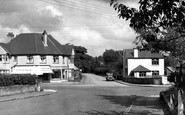
Growing Up In Rumford
I wasn't born there but the years I spent in Rumford were some of my happiest. We moved there in 1960, my parents bought a house in the very centre of the village which also had a grocery shop attached. It turned out that ...Read more
A memory of Rumford by
It Was A Cruel Cold Place To Be As A Child With A Wicked Cruel Matron Who Ruled With A Rod Of Iron.
staying in the home has left me scarred for life. me and my brother who was 2 and i was 6, were taken there and left for what seemed like months. no ...Read more
A memory of Hornsea by
Wetheral Village Blacksmith
My grandfather was the village blacksmith in Wetheral who had his forge behind the District Nurse's House opposite the Wheatsheaf pub. His name was Tommy Marshall. By the time I knew him in the 1950s he was more of an ...Read more
A memory of Wetheral by
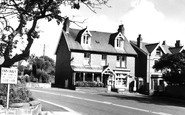
My Early Years In Ferniegair By Edwin Allsopp Living With Grandma Margaret Simon
I lived with my grandparents in the late 1940s at 201 Carlisle road Ferniegair, known as the huts which was opposite the gatehouse to the duke of Hamilton estate.My ...Read more
A memory of Ferniegair by
St Paulinus School In The Late 40's
I have very fond memories of Crayford particularly going to St Paulinus School down Iron Mill Lane. I was just a little boy but my father's work took us all over England at the time, and unfortunately we only ...Read more
A memory of Crayford in 1949 by
A Fantastic Place To Grow Up In
I Lived in Bulford Camp from 1942 - 1958 and attended Wing School. The street the school was on was Bond St. A street of terraced corrigated iron houses, inhabited by civillian workers. My family and I returned in 1989 ...Read more
A memory of Bulford in 1958 by
A Young Yank At Wadenhoe 1955
In 1955, several Air Force families stationed variously at Alconbury and Molesworth Air Force Bases in England found themselves renting flats (apts) in a Jacobean Manor House in the English Countryside. The landlady, ...Read more
A memory of Wadenhoe in 1955 by
Footbridge Over The Canal
I recall the day the iron footbridge was lowered into place over the canal. I'm probably wrong but I think it was lowered into its position by a huge crane, how they got it to the bridge I've no idea. Have I dreamt this ...Read more
A memory of Carnforth in 1945 by
Captions
796 captions found. Showing results 601 to 624.

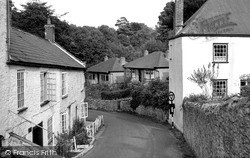
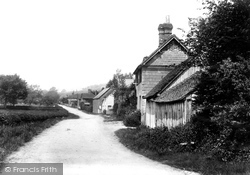
Across the road, beside the old-style 'Halt' sign, is Sunnybanks (right), where the corrugated iron roof has since been removed and replaced by thatch.
It later became a centre for the iron industry with a furnace, a forge and a cannon foundry. The church of St Margaret has Norman walling and windows.
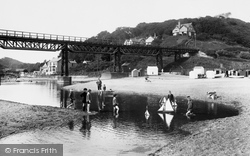
It was a popular place for holidays when this picture was taken, even though the village was disfigured by a ruin of an alum works and an iron bridge carrying the LNER railway line from Whitby to Saltburn
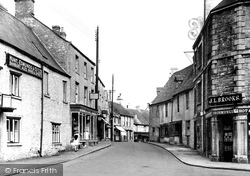
The proprietor of J L Brooks' ironmongery shop has not yet opened the shop's wrought iron entrance gate.
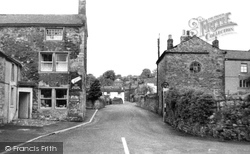
Two bus stops are opposite each other: one is outside the shop advertising Zebrite, a black lead used to clean iron grates and the ranges found in most cottages.
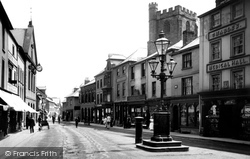
This is High Street Inferior, with the centrepiece of a fanciful wrought iron structure providing three gas lanterns as well as a drinking fountain.
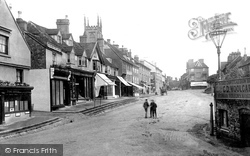
On the right is part of West Buildings - demolished in 1891 - with a hand lettered board advertising George Woolgar's iron works in nearby West Street.
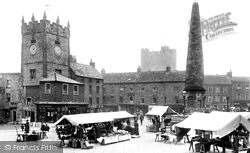
By 1440 the town was trading in dairy produce, wine, fish, garlic, silk, iron, coal, copper and lead.
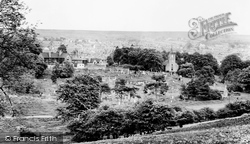
Almost everything in the church—the pillars, the window frames, the font and the tombs - is made of Blaenavon iron.
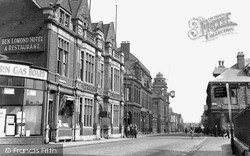
The firm expanded rapidly, for it had its own coal mines, iron and steel making plant, and a marine engine works.
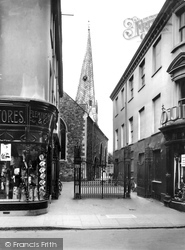
The wrought iron gate survived the last war.
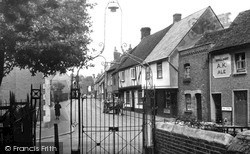
With the wrought iron gate and lantern frame in front of us, we look northwards towards Bourne Close and eventually, by a footpath across the fields, to Moles Farm and the Sow and Pigs public house at
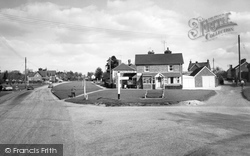
There are connections with the Sussex iron industry, for an ironmaster once lived here.The 17th-century house Birch Grove was the home of Harold Macmillan, the former Prime Minister.
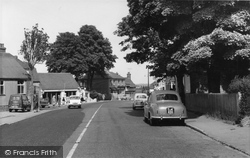
On the left, at the corner of West End, is the Woolpack Inn, which still has the corrugated iron clad function room we see in this view.
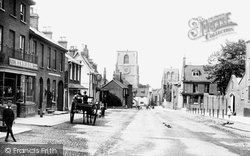
On the left is Kerrison the butcher's ornamented shop front, with a refined iron balcony overhead.
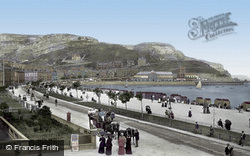
faced by numerous hotels, its expanse of sands between the headlands of the Great and Little Ormes, its pier, its wide streets and its shops beneath glass canopies supported by delicately decorated cast-iron
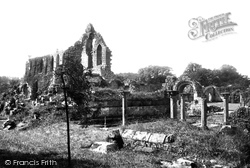
The abbey was established in 1156, and it gained its revenue from sheep breeding and mining for coal and iron. The monks were the first to produce Wensleydale cheese, using sheep's milk.
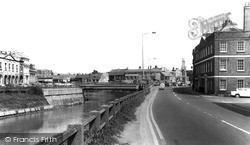
It is ironic that this fine house should be frequently disregarded in favour of the Trust's own Wisbech property, Peckover House.
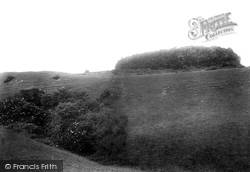
Now a tree-clad hilltop fort, this is another example of the many forts built by the Iron Age people. To date it has never been excavated.
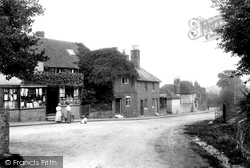
But nearby Oldbury Hill has traces of Neanderthal hunters and an Iron Age fort on its slopes.
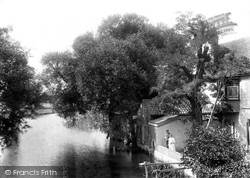
Long stretches of these Iron-Age defensive works survive on either side of Lexden, and were clearly intended to protect the west and south-west flanks of the town.
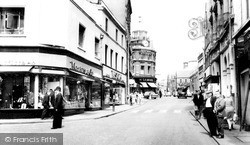
By 1860 it was the principal town of Wales, and the iron-making capital of the world. The vehicle on the right-hand side is a dark blue Merthyr Tydfil Corporation ambulance.
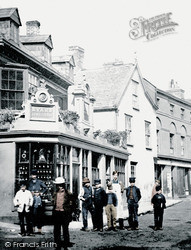
This is the main road through what was once the home of the Welsh iron industry. The first forge is reputed to have been working in 1425, with the first ironworks following in 1577.
But nearby Oldbury Hill has traces of Neanderthal hunters and an Iron Age fort on its slopes.
Places (4)
Photos (88)
Memories (713)
Books (0)
Maps (70)