Merry Christmas & Happy New Year!
Christmas Deliveries: If you placed an order on or before midday on Friday 19th December for Christmas delivery it was despatched before the Royal Mail or Parcel Force deadline and therefore should be received in time for Christmas. Orders placed after midday on Friday 19th December will be delivered in the New Year.
Please Note: Our offices and factory are now closed until Monday 5th January when we will be pleased to deal with any queries that have arisen during the holiday period.
During the holiday our Gift Cards may still be ordered for any last minute orders and will be sent automatically by email direct to your recipient - see here: Gift Cards
Places
4 places found.
Those places high-lighted have photos. All locations may have maps, books and memories.
Photos
88 photos found. Showing results 441 to 88.
Maps
70 maps found.
Books
Sorry, no books were found that related to your search.
Memories
713 memories found. Showing results 221 to 230.
Growing Up In Moniaive 1954 1969
I was born and brought up in Moniaive, and my mother owned the local hairdresser's salon (JACIE'S) at 3 Ayr Street. I lived with my mother (Janet), sister (Jenny) and maternal grandparents (who also had a house in ...Read more
A memory of Moniaive in 1954 by
Memories Of My Childhood In Rossington.
My story starts on the 1st of March 1950, the date of my birth at Doncaster Royal Infirmary. My parents Jack & Mary Flather lived in Old Rossington at 65 Haigh Crescent, living with relatives (Guy) ...Read more
A memory of New Rossington in 1950 by
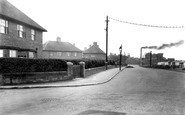
The Bawdeswell Plane Crash The Willows And The Rectory
Although I was just a little lad I can remember seeing the smoking debris of All Saints Church after the Mosquito crashed on it. I was staying in "The Willows" which is opposite the church ...Read more
A memory of Bawdeswell in 1944 by
Old Memories
I was born in Spring Hill nursing home in 1933, corner of Hill Lane and Howard Road, and I used to take short cuts via the bomb site on the way to school, sometimes I would find a coin or two. We lived near the Dell football ground ...Read more
A memory of Southampton in 1944 by
Just A Kibbuth Lad
For those who have never been to our village called Kibworth, it is worth noting locals call it "Kibbuth". You live in either "Top Kibbuth"- Kibworth Harcourt or "Bottom Kibbuth"- Kibworth Beauchamp. I myself personally, ...Read more
A memory of Kibworth Harcourt in 1973 by
Homesick
I went to Steventon as a 'Mother's Help' to an Italian family. I came from near Manchester. I had to clean, look after a baby and a toddler and help with cooking. But I had never been away from home before and decided it wasn't for me. It ...Read more
A memory of Steventon in 1970 by
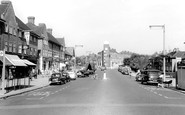
North Harrow Shops
I left Pinner Grammar School in 1963 and well remember this view as I sometimes cycled this route back home to Hatch End. Mostly I would go home the direct way through Pinner but I can remember putting in the extra miles to go ...Read more
A memory of North Harrow in 1963 by
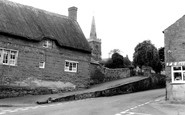
Going To Work At Tattersall's
I was born in 1953 in Northampton. Later my family moved and settled in Essex but my childhood was spent in Spratton with my Nana Anderson. She worked at Mr Tattersall's as a housekeeper and during the holidays I would ...Read more
A memory of Spratton in 1957 by
Growing Up In World War Ii
I was born to Jewish parents whom had a ladies clothes shop in Kensington Gardens (The Lanes) my Father died in 1941, My Mother now a very young widow decided she wanted us all to live above the shop because of bombs ...Read more
A memory of Brighton in 1930 by
My Grandparents
My grandparents George and Elsie Wood lived on Landells Road for most of their married lives. They had two daughters, my mum Elsie and my auntie Bibby (Vivian). When my parents and I moved to Derby around 1965 (when I was about three) ...Read more
A memory of Dulwich in 1967 by
Captions
796 captions found. Showing results 529 to 552.

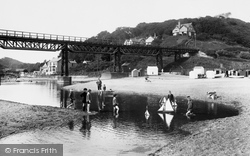
It was a popular place for holidays when this picture was taken, even though the village was disfigured by a ruin of an alum works and an iron bridge carrying the LNER railway line from Whitby to Saltburn
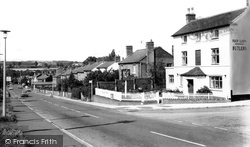
The chimney stack in the distance is that of Cookley Iron Works. The Red Lion public house (right) opened after 1830, along with the Eagle and Spur Inn.
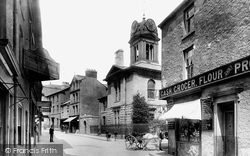
It exported copper, iron, slate, barley, bobbins, gunpowder and leather all over the Empire.
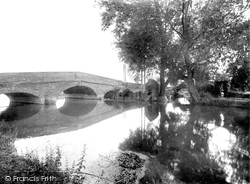
The bridge is built in greensand stone, which in Bedfordshire is actually dark brown owing to a high iron content in the rock.
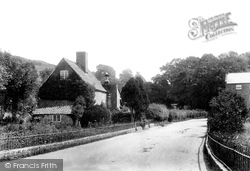
Foundry Cottages (left) and three-storey Foundry House (far right), in West Allington, were the hub of Richard Robert Samson`s Grove Iron Works.
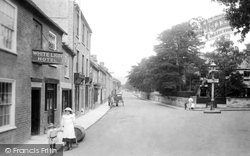
Opposite, on the corner with North Allington, the principle towns on the cast-iron road sign are Exeter (straight ahead) and Chard (right). West Court is behind the trees.
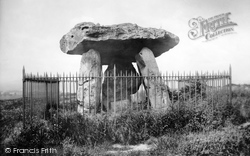
In this picture the monument was even then surrounded by iron railings to protect it from visitors.
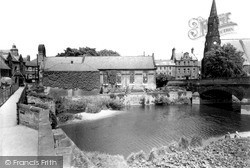
This photograph was taken from the old footbridge, of which only the central pier and abutments remain; the cast iron section was added in 1869.
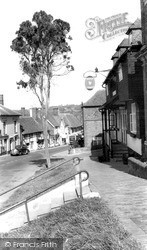
Bodiam is located on the River Rother and was once a port that shipped iron ingots and cannon, which were made in the area.
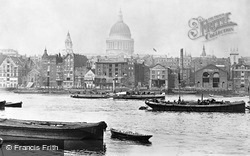
On the right is the colliery wharf of the Weardale Iron and Coal Company.
It was a popular place for holidays, even though the village had been spoiled not only by the ruins of an alum works, but by an iron bridge that carried the railway line between Whitby and Saltburn.
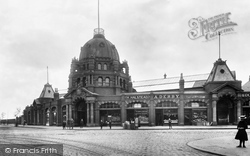
In those days it was open to the elements; in 1867 it was decided that it should be covered over with an iron and glass roof.
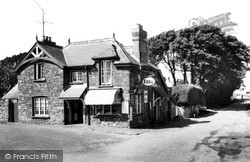
Holidaymakers may not always have known about the 130 or so Iron Age hut circles that exist on Gateholm Island, accessible at low tide.
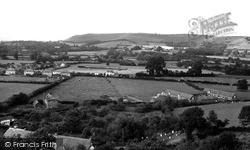
Hambledon Hill, with the earthworks of an Iron Age hill-fort, dominates the skyline.
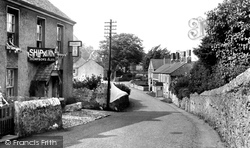
Its small harbour was once used to unload coal and take on iron ore and corn from the surrounding countryside.
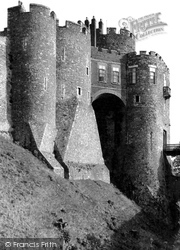
One of the finest fortresses in England, Dover Castle traces its history back to the Iron Age earthworks on the site.
On the right is the colliery wharf of the Weardale Iron and Coal Company.
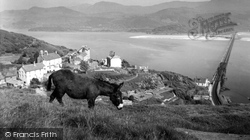
The approach to Barmouth along the estuary is one of the most spectacular scenic routes in Britain, and it has inspired artists and visitors for centuries.
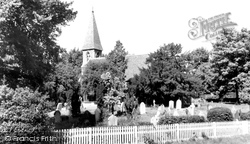
Picturesque in its remarkably rural surroundings, its building materials include examples of a geological oddity: blocks of iron cemented gravel-stone (Fericrete), which is also to be seen in the base
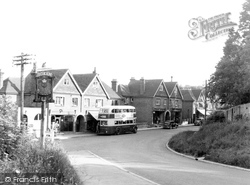
Old industries in the area were iron ore mining and brickmaking, which is expected to be revived soon.
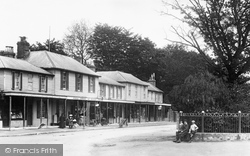
This fairly graceful early 19th-century shopping arcade, with its weatherboarded houses with large shop windows under a colonnade of thin cast iron columns, included a general hardware and implement
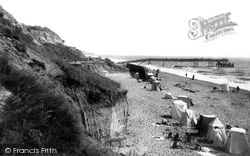
The pier was built of iron in 1881, and measured 300 feet in length by 30 feet wide.
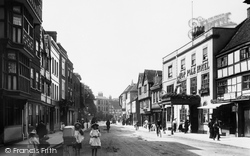
The 18th-century Royal Hop Pole Hotel on the right- hand side of the street, with its wrought iron, flower- bedecked canopy and window boxes, is featured in Charles Dickens's 'Pickwick Papers
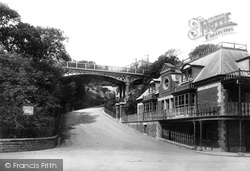
Behind the building, the iron bridge linking Windsor Gardens spans the old path to the coastguard's station.
Places (4)
Photos (88)
Memories (713)
Books (0)
Maps (70)